
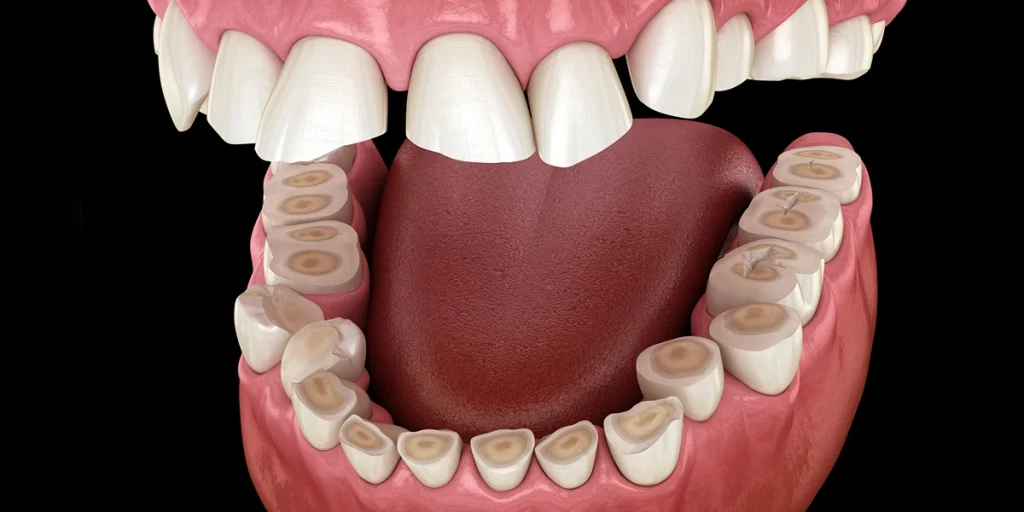
Bruxism, often referred to as teeth grinding, is the involuntary clenching or grinding of the teeth—most commonly during sleep but sometimes in waking hours. This habitual activity places excessive force on the teeth and jaw muscles, leading to enamel wear, jaw pain, headaches and even temporomandibular joint (TMJ) dysfunction.
Risk factors for bruxism encompass:
- Psychological stress: heightened anxiety or tension during the day
- Malocclusion: an uneven bite that triggers compensatory muscle activity
- Lifestyle influences: caffeine intake, certain medications and alcohol use
- Sleep disturbances: conditions such as obstructive sleep apnoea
By recognising these triggers, individuals can adopt targeted approaches to interrupt the grinding cycle.
What Role Do Custom-Fitted Occlusal Splints Play?
One of the most effective bruxism treatment strategies is the use of a custom-fitted occlusal splint. Crafted from hard acrylic to precisely match your bite, these night guards cushion the teeth and redistribute biting forces away from vulnerable enamel.
Attributes of occlusal splints include:
- Effectiveness: Clinically proven to reduce nocturnal grinding episodes by up to 80%
- Comfort: Once properly adjusted, they can be worn throughout the night with minimal awareness
- Maintenance: Require routine cleaning and occasional adjustment by your dentist Melbourne
- Accessibility: Available through most dental practices without specialist referral
By acting as a physical barrier, occlusal splints not only protect tooth surfaces but also help relax overactive jaw muscles over time.
How Can Stress Management Techniques Help?
Because stress-related teeth clenching is a common bruxism driver, incorporating stress management techniques is vital. Evidence-based methods to reduce overall tension include:
- Mindfulness meditation: daily practice of focused breathing to calm the autonomic nervous system
- Progressive muscle relaxation: systematic tensing and releasing of muscle groups, including the jaw
- Physical activity: yoga or gentle cardio to dissipate built-up stress hormones
These techniques are highly accessible—requiring little more than time and commitment—and carry no physical side effects. Over weeks of consistent practice, many patients report not only reduced bruxism episodes but also improvements in sleep quality and daytime wellbeing.
What Behavioural Habit Reversal Techniques Should You Adopt?
Behavioural habit reversal is a non-invasive strategy that targets daytime jaw clenching, which can carry over into sleep patterns. The process consists of three stages:
- Awareness training: recognising each instance of clenching or grinding during waking hours
- Competing response: substituting a relaxed jaw posture (teeth slightly apart, lips gently closed) whenever clenching is detected
- Motivational support: using reminders—such as notes or smartphone alerts—and tracking progress in a diary
Although habit reversal primarily addresses awake bruxism, reducing overall muscle tension can indirectly decrease nocturnal grinding.
How Does Biofeedback Train Jaw Muscles?
Biofeedback and relaxation training employ small sensors placed against the skin over jaw muscles. When excessive muscle activity is detected, the device emits a gentle alert—often a vibration or sound—prompting immediate relaxation.
Key points about biofeedback:
- Evidence-based: studies indicate up to a 70% reduction in grinding events over three months
- Learning effect: users gradually internalise the relaxation response even without the device
- Maintenance: periodic recalibration and guided sessions with a specialist ensure optimal results
By teaching neuromuscular control, biofeedback offers a non-pharmacological route to break the teeth-grinding habit.
When Is Orthodontic or Dental Correction Appropriate?
Malocclusion or uneven bite contacts can perpetuate bruxism. In select cases, dental correction—including orthodontics or minor reshaping of tooth surfaces (enameloplasty)—provides a long-term solution by harmonising the bite.
Considerations for dental correction:
- Long-term alignment: braces or clear aligners can redistribute occlusal forces evenly
- Professional oversight: treatment plans must be tailored and monitored by a dentist or orthodontist
- Patient suitability: not all grinding stems from malocclusion, so comprehensive assessment is essential
While more involved than other strategies, bite realignment can yield lasting relief for those whose bruxism is rooted in structural dental issues.
What Role Does Medication Play in Short-Term Relief?
In some situations, pharmacological support may be indicated for acute symptom control:
- Muscle relaxants: short-term use of low-dose agents can diminish nocturnal clenching
- Anxiolytics: temporary prescription of anti-anxiety medication to lower stress-related triggers
Medication should always be a provisional measure under medical guidance, given the potential for side effects and dependency. It is most effective when combined with non-drug strategies for lasting benefit.
How Can Sleep Hygiene Optimisation Improve Outcomes?
Sleep hygiene measures focus on creating an environment and routine conducive to restorative rest. Simple adjustments include:
- Consistent schedule: going to bed and waking at the same time daily
- Screen curfew: avoiding electronic devices for at least an hour before sleep
- Comfortable setting: ensuring a cool, dark and quiet bedroom
Although sleep hygiene does not directly stop grinding, it supports other interventions by enhancing overall sleep architecture and muscle relaxation.
What Jaw Exercises and Physical Therapy Techniques Work?
Physical therapy complements dental and behavioural approaches by directly addressing muscle tension:
- Guided jaw stretches: gentle opening and side-to-side movements to increase flexibility
- Targeted massage: manual release of the masseter and temporalis muscles
- Heat therapy: application of warm compresses to soothe tight muscles
Regular practice—ideally under the supervision of a trained physiotherapist—can reduce pain and improve jaw mobility, making other therapies more effective.
What Are the Key Attributes of Each Strategy?
- Custom-fitted occlusal splints offer the highest effectiveness and moderate comfort, require professional fitting and ongoing maintenance.
- Stress management techniques provide excellent comfort and accessibility, with strong evidence for reducing overall muscle tension.
- Behavioural habit reversal is highly accessible and cost-free, though less potent at night.
- Biofeedback training balances effectiveness and non-invasiveness but may need specialist guidance.
- Dental correction yields long-term occlusal harmony but involves extended treatment under close supervision.
- Medication delivers rapid relief but carries potential side effects and is not intended for chronic use.
- Sleep hygiene is the simplest to adopt, supporting other methods by improving sleep quality.
- Physical therapy effectively relieves muscle tension but demands patient adherence and professional input.
How Can Women in Dentistry Support You?
At Women in Dentistry, we combine cutting-edge technology with a compassionate, patient-centred approach. Our comprehensive bruxism management includes:
- Digital bite analysis for perfectly fitting occlusal splints
- Structured stress-reduction workshops led by experienced wellness coaches
- On-site biofeedback assessments to monitor and refine muscle-training protocols
- Personalised orthodontic consultations for clients requiring bite realignment
- Integrated physical therapy sessions in our clinic to ensure consistent progress
By uniting these strategies, Women in Dentistry empowers you to break the teeth-grinding cycle and reclaim pain-free, restful sleep—and a healthier smile.
References
- Australian Dental Association. “Bruxism Management Guidelines.” ADA, 2021.
- National Health and Medical Research Council. “Clinical Practice Guidelines for Sleep-Related Bruxism.” NHMRC, 2020.
- Smith J, Lee R. “Efficacy of Occlusal Splints in Nocturnal Bruxism.” Australian Dental Journal, 2019.
Frequently Asked Questions
- What causes bruxism in adults?
Bruxism can arise from elevated stress levels, an uneven bite, certain medications and sleep disorders such as obstructive sleep apnoea. - How soon will I notice improvement with an occlusal splint?
Most patients experience a reduction in grinding episodes within two to four weeks of nightly use. - Are biofeedback devices uncomfortable to wear?
Modern biofeedback units are compact and designed to minimise intrusion, allowing comfortable sleep for the majority of users. - Can stress management alone stop teeth grinding?
While stress reduction is vital, combining it with interventions like splints or physical therapy delivers the most reliable results. - Is orthodontic treatment reversible if I change my mind?
Orthodontic alterations are intended as a long-term solution, though removable retainers can help maintain teeth positions if treatment is paused. - When should I see a dental professional about bruxism?
If you experience persistent jaw pain, frequent headaches or noticeable enamel wear, schedule a consultation promptly to prevent further damage.





