
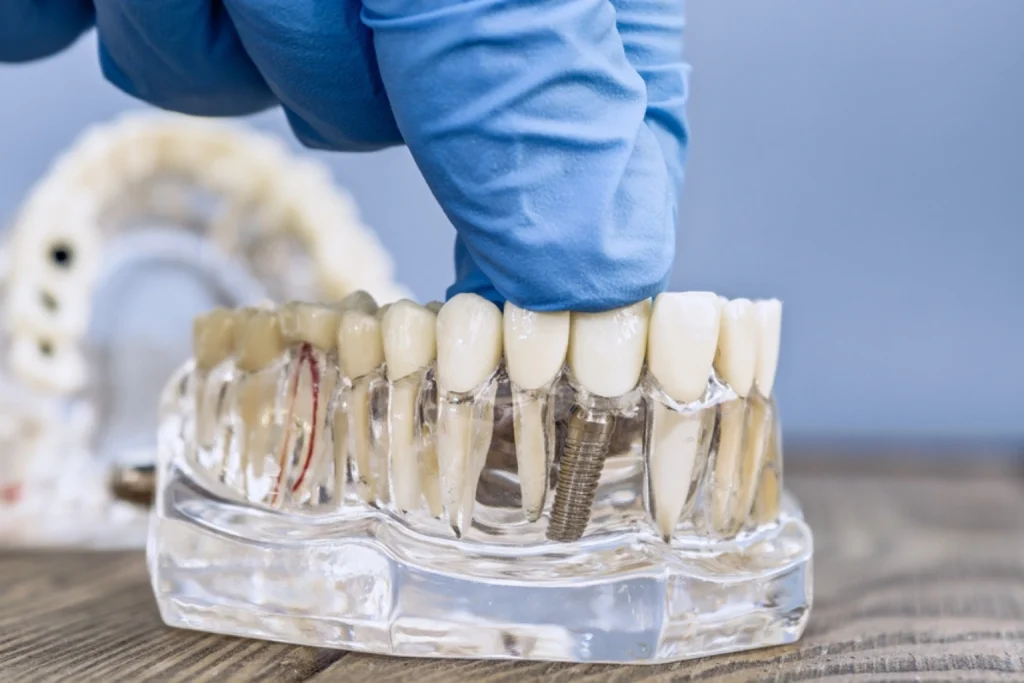
Missing or damaged teeth can affect both confidence and long-term oral health. Implant dentistry offers a natural-looking, durable solution that restores proper function along with the appearance of a real tooth. For anyone considering the treatment, understanding what actually happens at each stage makes the decision easier and the experience less daunting.
This guide walks Melbourne patients through each stage of dental implant treatment at our Melbourne CBD clinic, along with the main benefits and answers to the questions patients most commonly ask before booking a consultation.
What Are Dental Implants?
A dental implant is made up of three parts: a titanium post that acts as the artificial tooth root, a connector called the abutment, and a crown that sits on top. The post is surgically placed into the jawbone, where it fuses with the bone to form a stable base. The abutment and crown are then attached to complete the restoration, producing a tooth that looks and functions like a natural one. For a broader look at how dental implants work and where they fit into modern restorative dentistry, the practice’s overview article covers the fundamentals.
The Dental Implant Procedure Step by Step
1. Initial Consultation
The process begins with a comprehensive assessment. The dentist takes X-rays, evaluates the health of the teeth and gums, and discusses treatment goals with the patient. Together they agree on a plan tailored to the patient’s needs and desired outcome.
2. Preparatory Procedures (If Needed)
Some patients require additional steps before the implant can be placed. These may include bone grafting to build up the jawbone or extraction of a damaged tooth. If either is necessary, the dentist explains the procedure and schedules it in advance of the main implant surgery.
3. Implant Insertion
Under local anaesthetic, our Collins Street dentist carefully prepares the jawbone and positions the titanium post that will serve as the artificial tooth root. The gums are then sutured closed and the implant is left to heal for several months. During this healing period, the bone bonds directly to the implant through a process called osseointegration, which is what gives the finished restoration its long-term stability.
4. Abutment Attachment
Once healing is complete, a minor second procedure exposes the top of the implant so that the abutment can be attached. This is a shorter appointment than the initial placement and is the connecting step between the healed implant and the final restoration.
5. Crown Placement
A custom-made restoration, most commonly a crown but sometimes a bridge or implant-supported denture for multiple missing teeth, is secured onto the abutment. The restoration is designed to blend seamlessly with the surrounding teeth in shape, size, and shade, completing the treatment. Patients considering related restorations can also read about dental crowns and bridges as standalone options.
Benefits of Dental Implants
Implants offer several advantages over other tooth-replacement options such as traditional bridges or removable dentures. For a comparison of those alternatives, see the guide on everything you need to know about crowns and bridges.
- Long-lasting results. Well-maintained implants routinely last 25 years or more, and many last a lifetime with consistent oral hygiene and regular checkups.
- Preservation of jawbone health. The implant post stimulates the jawbone the way a natural tooth root does, which helps prevent the bone loss that typically follows tooth loss.
- Natural look and feel. Implants are the closest available restoration to a natural tooth in both appearance and function.
- Confidence in daily use. Patients can eat, speak, and smile without worrying about slipping or shifting, which is a common concern with removable dentures.
- Stability and security. Because the implant is fused to the jawbone, it does not move or loosen the way conventional bridges or dentures can.
Ready to Restore Your Smile?
For patients researching a reliable implant provider in Melbourne CBD, the team at Women in Dentistry offers personalised treatment plans focused on long-lasting results and comfortable, patient-centred care. The dentists provide step-by-step support throughout the process, including follow-up sessions to protect and extend the life of the implants. Contact the practice to book a consultation and discuss whether dental implants are the right option.
Frequently Asked Questions
What is the average lifespan of a dental implant?
With proper oral hygiene and regular dental checkups, most dental implants last 25 years or longer. Many remain functional for the patient’s lifetime.
Are dental implants safe?
Yes. Dental implants are a well-established procedure with a strong long-term success rate. Local anaesthesia is used to keep the process comfortable throughout.
Is the implant procedure painful?
The procedure itself is performed under local anaesthetic, so patients do not feel pain during placement. Mild swelling or tenderness in the days following surgery is normal and is generally managed with standard pain relief.
Am I a good candidate for dental implants?
Not every patient is suited to implants. The dentist assesses overall oral health, gum condition, jawbone density, and general medical history during the initial consultation to determine whether implants are the best option or whether a preparatory step, such as bone grafting, is required first. Read more about who is a good candidate for dental implants.
How much do dental implants cost?
A single dental implant at Women in Dentistry starts from $3,000, which usually covers the implant, abutment and crown. Your final fee depends on how many teeth are being replaced, the health of your jawbone, the materials used, and whether preparatory treatment such as bone grafting or an extraction is needed. Your dentist will confirm an itemised quote at your consultation, before any treatment begins. Many private health extras policies contribute part of the cost, and payment options are available. See our guide to dental implant costs in Melbourne for a full breakdown.





