
What Are Dental Implants and Why Are They Used?
Dental implants are a permanent solution for replacing missing teeth, offering a natural-looking, biocompatible, and long-lasting alternative to traditional dentures or bridges. Unlike removable prosthetics, dental implants integrate directly with the jawbone, providing a secure fit that restores functionality, aesthetics, and oral health. At our Collins Street clinic, we provide dental implant treatment in Melbourne CBD for single and multiple missing teeth.
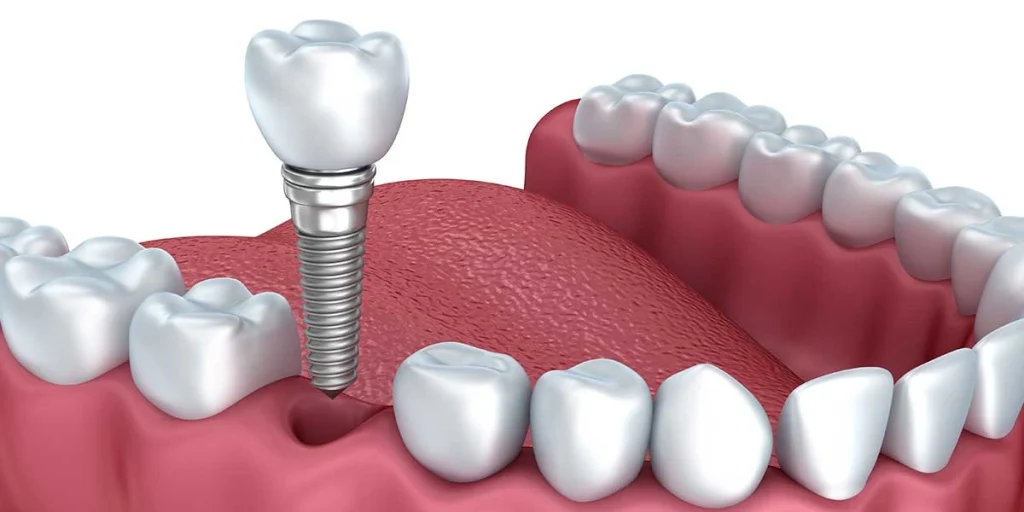
Designed to mimic the structure of a natural tooth, a dental implant consists of three primary components:
| Component | Function |
| Implant Post (Titanium Screw) | Acts as an artificial tooth root, inserted into the jawbone. |
| Abutment | Connects the implant to the prosthetic tooth. |
| Crown | The visible, custom-made prosthetic tooth that mimics the natural tooth. |
Dental implants are widely recommended for individuals experiencing tooth loss due to decay, injury, or disease, helping prevent bone resorption, periodontal disease, and jawbone deterioration.
How Do Dental Implants Work?
The success of a dental implant lies in a process known as osseointegration, where the titanium post fuses with the jawbone over several months. This ensures stability and prevents the complications associated with missing teeth, such as bone loss and shifting teeth.
The implant placement process typically follows these key steps:
Step 1: Initial Consultation and Planning
- A comprehensive oral examination using X-rays and scans to assess bone structure and determine implant suitability.
- Discussion of any additional treatments required, such as bone grafting or tooth extraction.
Step 2: Tooth Extraction (if necessary)
- If a damaged or decayed tooth remains in the site of the implant, it will need to be removed.
- Healing time may be required before implant placement.
Step 3: Bone Grafting (if required)
- If the jawbone lacks sufficient density, a bone grafting procedure may be performed.
- Healing can take several months before implant placement.
Step 4: Implant Placement Surgery
- A titanium post is surgically inserted into the jawbone under local anaesthesia.
- Over the next 3-6 months, the bone fuses with the implant through osseointegration.
Step 5: Abutment Placement
- Once the implant has fused with the jawbone, an abutment is attached.
- This acts as a connector between the implant and the prosthetic crown.
Step 6: Crown Placement
- A custom-made ceramic or porcelain crown is secured onto the abutment, restoring the natural appearance and function of the tooth.
What Are the Different Types of Dental Implants?
Depending on the patient’s bone structure, oral health, and individual needs, there are several types of dental implants available:
- Endosteal Implants – The most common type, placed directly into the jawbone.
- Subperiosteal Implants – Placed under the gum but above the jawbone, suitable for patients with insufficient bone density.
- Zygomatic Implants – Used for patients with severe bone loss, anchoring into the cheekbone (zygoma) rather than the jawbone.
What Are the Benefits of Dental Implants?
Dental implants offer a range of benefits, making them an optimal choice for tooth replacement:
| Benefit | Description |
| Longevity | Can last 20+ years with proper care. |
| Natural Appearance | Designed to mimic real teeth for a seamless look. |
| Bone Preservation | Helps prevent jawbone deterioration. |
| No Slipping | Unlike dentures, implants remain fixed in place. |
| Restores Functionality | Enables comfortable eating, speaking, and smiling. |
What Are the Risks and Complications of Dental Implants?
While dental implants boast a high success rate, some potential complications may arise:
- Infection (Peri-implantitis): Poor oral hygiene can lead to inflammation around the implant.
- Nerve Damage: Rare, but improper placement may affect surrounding nerves.
- Implant Failure: Lack of osseointegration or excessive force can cause failure.
- Sinus Issues: Upper jaw implants may extend into the sinus cavity, requiring additional procedures.
- Allergic Reactions: Though uncommon, some individuals may experience sensitivity to titanium.
How Can You Maintain Your Dental Implants?
Proper care and maintenance are crucial for ensuring the longevity of dental implants:
- Daily brushing and flossing to maintain oral hygiene.
- Routine dental check-ups for professional cleaning and implant assessment.
- Avoiding excessive pressure from teeth grinding (bruxism) or using mouthguards as needed.
- Limiting hard and sticky foods that could damage the implant.
Why Choose Women in Dentistry for Your Dental Implant Needs?
When it comes to restorative dentistry, expertise, precision, and compassionate care are essential. Women in Dentistry provides a highly personalised approach, ensuring every patient receives the best possible treatment tailored to their unique dental needs. Our experienced professionals utilise state-of-the-art technology and advanced implant techniques to deliver exceptional, long-lasting results.
Whether you require single-tooth implants, full-mouth restoration, or implant-supported prosthetics, Women in Dentistry offers a supportive and professional environment where your comfort and oral health are the top priorities. Our dedicated team is committed to providing pain-free procedures, ensuring that your journey to a confident smile is both smooth and stress-free.
For expert dental implant care, trust Women in Dentistry to restore both your smile and your confidence with precision and excellence.
References
- Australian Dental Association. (2023). Dental Implants: What You Need to Know. Retrieved from https://www.ada.org.au
- Australian Society of Implant Dentistry. (2023). Understanding Osseointegration and Bone Grafting. Retrieved from https://www.asid.edu.au
- Dental Health Services Victoria. (2023). Maintaining Oral Health with Dental Implants. Retrieved from https://www.dhsv.org.au
Frequently Asked Questions (FAQs)
- How long do dental implants last?
Dental implants can last 20 years or more with proper care, including good oral hygiene and regular dental check-ups.
- Are dental implants painful?
The procedure is performed under local anaesthesia, minimising discomfort. Post-surgical pain is typically manageable with over-the-counter pain relief.
- Can anyone get dental implants?
Not everyone is a candidate. Factors like bone density, overall health, and gum condition are assessed before determining eligibility.
- How long does the entire dental implant process take?
The process typically takes between 3 to 6 months, allowing for osseointegration before the final crown placement.
- Do dental implants require special care?
Dental implants require regular brushing, flossing, and dental visits, similar to natural teeth.
- What happens if an implant fails?
In rare cases, implant failure can occur due to infection, poor osseointegration, or excessive stress. If this happens, the implant can often be replaced after additional treatment.





