
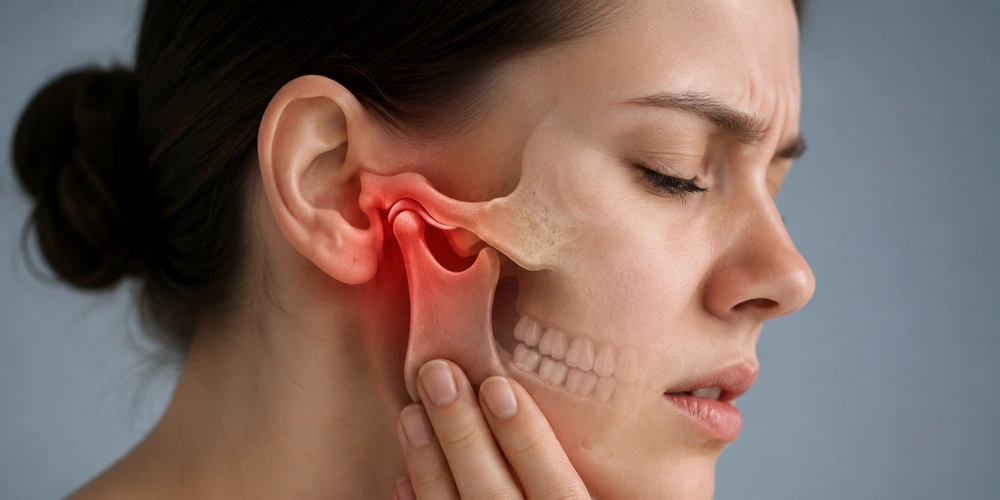
It starts as a party trick: a jaw that clicks when you yawn. Then come the mornings when your face feels tired before the day begins, the dull headache that lives at your temples, the moments mid-meal when the joint catches. Jaw pain and clicking are among the most quietly endured problems in dentistry, partly because people are not sure whose job the jaw actually is. It is the dentist’s, and the joint in question, the temporomandibular joint, is one of the hardest-working in the body. Here is how to read what your jaw is telling you, what tends to cause the trouble, and what treatment looks like at a Melbourne CBD practice.
Meet the Joint You Use Two Thousand Times a Day
The temporomandibular joint, TMJ for short, connects your lower jaw to your skull just in front of each ear, and it works constantly: every word, bite, swallow and yawn runs through it. A small cushioning disc inside the joint keeps the movement smooth.
As healthdirect describes it, TMJ dysfunction is a problem with the jaw joint itself or with the muscles around the jaw, and that distinction matters because the two produce similar pain through different mechanisms.
It is also a joint that hides in plain sight diagnostically. People with jaw trouble commonly spend months consulting GPs about headaches or ear discomfort before anyone examines the joint sitting millimetres from the symptoms, which is why knowing the jaw can be the culprit is half the battle.
When something in the system is strained, displaced or overworked, the symptoms radiate well beyond the joint, which is why jaw trouble so often wears disguises.
The Symptoms People Don’t Connect to Their Jaw
Clicking and popping are the famous ones, but the list runs longer: aching around the ear, temple headaches that peak in the morning, facial muscle fatigue, pain or tiredness when chewing, a jaw that locks or catches, and even neck and shoulder tension that keeps returning despite massages.
Morning symptoms carry a particular clue. A jaw that wakes up sore points towards night-time clenching or grinding, which loads the joint and muscles for hours while you sleep, entirely without your knowledge.
A painless click on its own is often harmless. Clicking with pain, locking, restricted opening, or headaches that keep recurring is a different category, and that combination has earned a professional assessment.
What Drives Jaw Trouble in the First Place
Clenching and grinding sit at the top of the list, and stress is their favourite fuel, which is why jaw symptoms so often flare during demanding stretches like the end of financial year. Many people clench through their workday without noticing, and grind through their sleep without believing it.
Bite mechanics matter too. Teeth that meet unevenly, missing teeth that change how force distributes, and habits like nail biting or constant gum chewing all change the load the joint carries day after day.
Posture and habit play supporting roles as well. Hours of screen work with the head carried forward changes how the jaw hangs and the muscles load, and resting habits matter more than people expect: at genuine rest, your lips can touch but your teeth should sit slightly apart.
Injury, arthritis affecting the joint, and disc displacement round out the picture. Because the causes differ so much, effective treatment starts with working out which one is actually yours, rather than reaching for a generic fix.
How Assessment and Treatment Actually Work
Assessment for teeth grinding and jaw problems involves examining the joint’s movement, the muscles around it, your bite, and the tell-tale wear patterns that clenching and grinding leave on teeth, building a picture of what is loading the system.
Treatment is then matched to cause. For grinders and clenchers, a custom-made occlusal splint worn at night protects teeth and takes strain off the joint; where bite issues contribute, dental treatment can rebalance how teeth meet; and habit and stress strategies deal with the daytime component.
Simple self-care supports the process: softer foods during flare-ups, avoiding extreme jaw opening, gentle warmth on tense muscles, and noticing when your teeth are touching during the day, because at rest, they should not be.
Where symptoms persist despite first-line care, the dentist Melbourne CBD also knows when to widen the team, coordinating with your GP or a physiotherapist, because stubborn jaw problems sometimes have more than one author and respond best to more than one discipline.
Getting Your Jaw Assessed in the Melbourne CBD
The logistics are easy for anyone working in or near the city. The practice sits at the Paris End of Collins Street, open six days with complimentary valet parking, and has been caring for Melbourne CBD patients for over 35 years.
The all-female team’s approach leans on education and unhurried explanation, which suits a problem like TMJ trouble where understanding your own triggers is half the treatment.
If your jaw has been clicking, aching or waking up tired, an assessment is a modest first step, bookable through the contact page or by phone, and considerably cheaper than another year of temple headaches.
The Takeaway
A clicking, aching or easily tired jaw is not a personality quirk to be endured; it is a hard-working joint reporting strain, and morning headaches, facial fatigue and recurring neck tension are often part of the same message. Because causes range from night-time grinding to bite mechanics, treatment starts with a proper assessment and is matched to what is actually driving the load. Women in Dentistry assesses and treats teeth grinding and jaw problems from its Collins Street practice, and a consultation is the sensible response to a jaw that has started speaking up.
Frequently Asked Questions
Why does my jaw click when I open my mouth?
Clicking usually comes from the small cushioning disc inside the jaw joint moving slightly out of its ideal position as you open and close. A painless click on its own is often harmless, but clicking with pain, locking or restricted opening warrants a professional assessment of the joint.
Can jaw problems cause headaches?
Yes, commonly. The muscles that power your jaw extend up to your temples, and sustained clenching or grinding can produce headaches, often worst in the morning after a night of grinding. Recurring temple headaches alongside jaw tiredness are a classic sign worth investigating.
What is an occlusal splint and does it help?
An occlusal splint is a custom-made appliance worn at night that protects teeth from grinding and reduces strain on the jaw joint and muscles. For clench-and-grind related jaw trouble it is a mainstay of treatment, fitted and adjusted by your dentist to suit your bite.
Does stress really cause jaw pain?
Stress is one of the most consistent drivers, because it fuels daytime clenching and night-time grinding, both of which overload the joint and muscles. Many people first notice jaw symptoms during demanding periods, and addressing the habit side is part of effective treatment.
When should I see a dentist about my jaw?
Book an assessment if you have jaw pain, clicking with discomfort, locking or catching, difficulty opening, unexplained morning headaches, or facial muscle fatigue that keeps returning. Earlier assessment means simpler treatment, since strained joints and worn teeth both prefer problems caught small.
This blog is intended for general informational purposes only and does not constitute medical or dental advice. Every patient’s oral health needs are unique. Please consult a qualified dental practitioner for advice specific to your situation. Women in Dentistry encourages all patients to seek a professional assessment before commencing any dental treatment.





