
Whitening choices can seem straightforward until you consider what is causing the colour change, how quickly you want to proceed and whether your teeth are likely to be sensitive. The right option depends on more than convenience.
This guide to in-office vs take-home teeth whitening explains what differs, what a dentist assesses and which questions can help you make an informed choice. Suitability should be discussed at a dental consultation.
First, understand what whitening can and cannot change
Whitening products work on natural tooth structure. They may lighten some stains within the tooth, but they do not change the colour of fillings, crowns, veneers or other restorations. If you have visible dental work, whitening may create a colour difference between that work and the surrounding teeth.
Tooth colour varies naturally. Some people notice yellowing with age, while other colour changes can relate to medicines, dental trauma or the way a tooth formed. Surface stains from foods, drinks or tobacco may respond differently from deeper discolouration. The cause helps guide a realistic discussion about what whitening might achieve.
Whitening is not a substitute for treating dental problems. Decay, cracked teeth, gum inflammation or exposed root surfaces may need attention first. A check-up lets your dentist assess your teeth and gums, identify possible causes of discolouration and discuss whether whitening is appropriate.
What happens with in-office whitening?
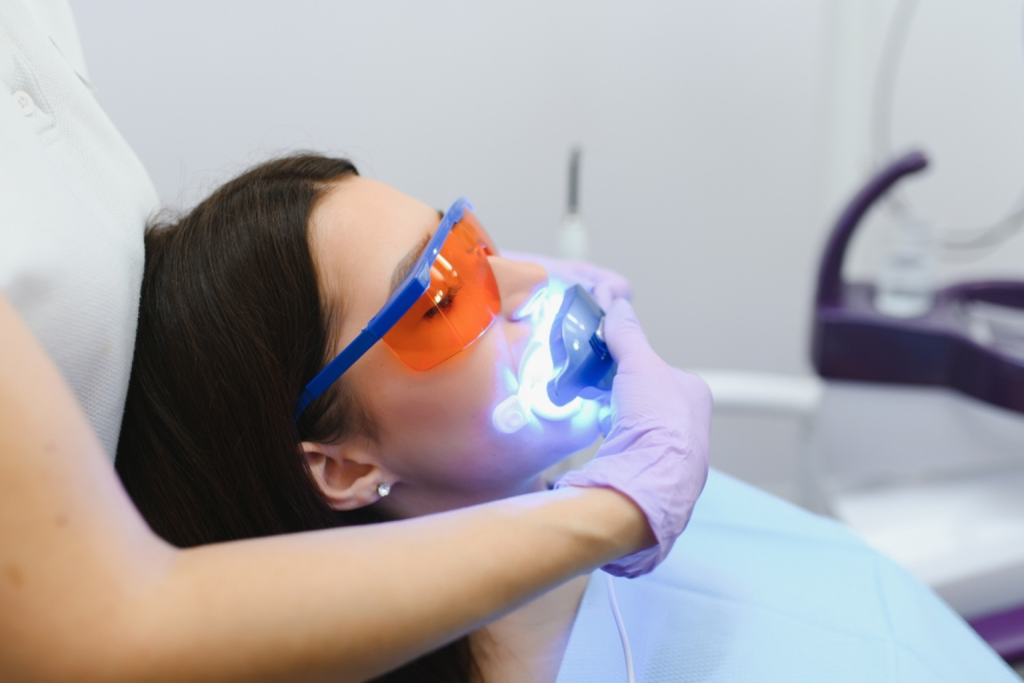
In-office whitening takes place during a dental appointment. The dentist examines your mouth, discusses your goals and checks whether your teeth and gums are suitable before treatment. The process and materials used can vary, so ask what the proposed appointment involves and what you may feel during and after it.
Because treatment is carried out at the practice, you do not need to manage the whitening steps at home. This can suit people who prefer a dentist-supervised appointment or have difficulty following a home routine. However, an appointment does not mean that every person will see the same degree of colour change.
Sensitivity can occur during or after whitening. Your dentist can discuss factors that may affect this, including existing sensitivity, gum recession and the condition of your enamel. Ask how to respond if sensitivity develops and whether the treatment plan should be adjusted.
How custom take-home trays work
Custom take-home whitening uses trays made to fit your teeth, alongside whitening gel prescribed or supplied as part of the dental plan. Your dentist explains how much gel to use, how long to wear the trays and how often to use them. Follow those directions rather than adding extra gel or extending wear time.
A close fit helps keep gel in contact with the teeth and limits excess material pressing onto the gums. The dentist checks the fit and gives instructions for use and storage. If a tray feels uncomfortable, does not sit properly or irritates your gums, contact the practice for advice instead of reshaping it yourself.
This approach requires consistency over the advised period. It may suit someone who prefers to whiten at home and can follow a measured routine. The pace depends on the treatment plan and individual response, so ask how progress will be reviewed and what to do if you notice sensitivity or uneven colour.
In-office vs take-home teeth whitening: what should guide your choice?
The main practical difference is where the whitening takes place and who manages each step. In-office whitening is performed during a dental appointment. Custom-tray whitening is used at home according to your dentist’s instructions. Neither option is suitable for everyone, and the choice should follow an assessment rather than a preference for speed alone.
Consider your dental history, sensitivity, schedule and ability to follow instructions. For example, a person with sensitive teeth may need an assessment and a tailored plan before choosing either method. Someone with crowns or fillings in the visible area should discuss how whitening could affect the match with those restorations.
Ask about expected changes, likely sensitivity, treatment timing, review appointments and what happens if you are unhappy with the colour. It is also useful to discuss whether a professional clean is appropriate first, as removing surface deposits can help your dentist assess your natural tooth shade more clearly.
Preparing for a whitening consultation
Bring a clear idea of what you would like to change. Point out which teeth concern you and whether the colour seems different across your smile. Mention previous whitening, tooth sensitivity, dental injuries, medicines and any restorations that show when you smile. These details can affect the assessment.
Your dentist may examine your teeth and gums and ask about your oral health. They can explain whether whitening is suitable, discuss the options available and outline possible limitations. If another issue needs attention first, the dentist can explain why and discuss the next steps.
Before you leave, make sure you understand the instructions, how to contact the practice with concerns and when to seek review. Do not use extra gel or combine whitening products unless your dentist advises you to. Following the agreed plan helps reduce avoidable irritation and supports appropriate monitoring.
The Takeaway
In-office and custom-tray whitening differ in where treatment happens and how much of the process you manage. The cause of discolouration, your oral health, existing dental work and sensitivity all matter. A dentist can assess these factors and discuss which approach, if any, may suit you. Ready to take the next step? Booking with Women in Dentistry takes only a moment. Arrange an appointment online or call the practice to find a time that suits you.
Frequently Asked Questions
Is in-office whitening faster than custom-tray whitening?
The approaches use different schedules. In-office treatment takes place during an appointment, while custom trays are used at home over the period advised by your dentist. Ask what timing applies to your proposed plan.
Can whitening make my teeth sensitive?
Sensitivity can occur during or after whitening. Tell your dentist about any existing sensitivity so it can be considered in the assessment and treatment instructions.
Will whitening change the colour of crowns or fillings?
No. Whitening affects natural teeth, not the colour of restorations. Your dentist can discuss whether visible dental work may look different after whitening.
Can I whiten teeth with gum problems or decay?
Your dentist should assess your teeth and gums first. Problems such as decay or gum inflammation may need attention before whitening is considered.
Are custom trays reusable?
Tray use and storage depend on the dentist’s instructions and the specific plan. Ask how to care for your trays and whether they remain suitable if your teeth or dental work change.
How do I choose between in-office and take-home whitening?
Discuss your goals, dental health, sensitivity, schedule and restorations with your dentist. The most appropriate option depends on an individual assessment.
This article provides general information only and is not a substitute for personalised dental advice. Women in Dentistry can assess your circumstances and discuss suitable options at a consultation.





