
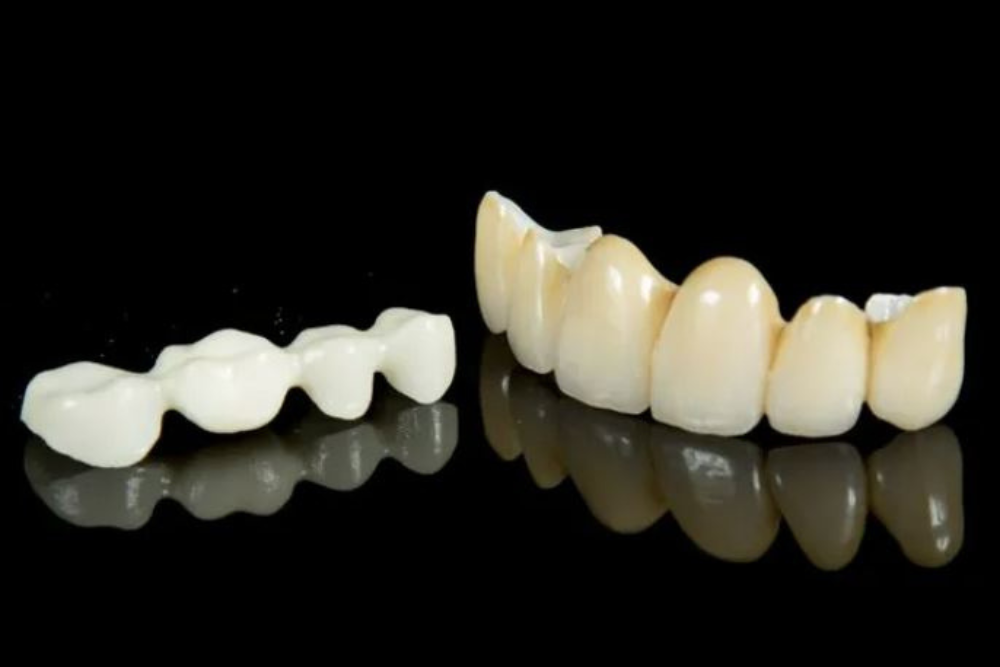
What Are Lab-Crafted Crowns and Why Are They Used?
Lab-crafted crowns are custom-made dental restorations designed to completely cover and protect a damaged or weakened tooth. Unlike same-day or chairside crowns, these restorations are fabricated externally in a dental laboratory, allowing for a more precise fit, enhanced strength, and highly aesthetic results. Typically recommended for teeth that have undergone significant decay, fractures, or root canal therapy, lab-crafted crowns restore both the functionality and appearance of natural teeth.
These crowns are fabricated using durable, biocompatible materials such as porcelain, zirconia, gold alloy, or porcelain-fused-to-metal. Their custom-fit design ensures maximum comfort and longevity, particularly in cases where precision is crucial for bite alignment and long-term wear.
What Are the Main Benefits of Lab-Crafted Crowns?
Lab-crafted crowns offer a range of advantages for patients looking for long-term and aesthetically pleasing dental restorations.
Key benefits include:
- Superior strength and durability
- Tailored fit and comfort
- Highly natural tooth-coloured aesthetics
- Wide range of material options
- Long-lasting restorative solution
- Enhanced chewing function and speech
- Biocompatibility with minimal risk of irritation
- Suitable for both anterior and posterior teeth
Each crown is carefully crafted by skilled technicians using advanced digital or physical moulds, ensuring a reliable, high-quality result.
What Is the Process for Getting a Lab-Crafted Crown?
Receiving a lab-crafted crown involves multiple steps over two or more dental visits. This phased process ensures precision and optimal comfort.
Step-by-step guide to the lab-crafted crown process:
- Initial consultation and diagnosis
- A dentist examines the affected tooth and discusses restoration options.
- Tooth preparation
- The damaged tooth is shaped to accommodate the crown.
- Taking impressions
- Traditional moulds or digital scans are used to create a detailed image of the tooth.
- Placement of a temporary crown
- A temporary restoration is fitted to protect the tooth while the lab creates the permanent crown.
- Laboratory fabrication
- The crown is custom-made in a dental laboratory using the chosen material.
- Fitting and adjustments
- The dentist ensures the crown fits well, making any necessary adjustments.
- Permanent crown cementation
- The crown is securely bonded to the prepared tooth.
- Final checks
- Bite alignment, aesthetics, and comfort are assessed for optimal results.
What Materials Are Commonly Used for Lab-Crafted Crowns?
Different materials offer various advantages in terms of appearance, durability, and suitability for certain locations in the mouth. Here is a comparison:
Common Crown Materials and Their Benefits
| Material Type | Aesthetic Quality | Strength | Ideal Use Case |
| Porcelain | High | Moderate | Front teeth for a natural appearance |
| Zirconia | High | Very High | Molars or patients with bruxism |
| Porcelain-Fused-to-Metal (PFM) | Moderate | High | Bridges or back teeth |
| Gold Alloy | Low | High | Long-lasting; suitable for posterior teeth |
| Resin Composite | Moderate | Moderate | Temporary or budget-conscious restorations |
Your dentist melbourne CBD will recommend the most suitable material based on your specific oral health needs, aesthetic preferences, and location of the tooth.
How Do Lab-Crafted Crowns Compare to Same-Day Crowns?
Same-day (CEREC) crowns offer convenience, but lab-crafted options provide superior customisation and durability in many cases.
Lab-Crafted vs Same-Day Crowns
| Feature | Lab-Crafted Crowns | Same-Day Crowns (CEREC) |
| Number of Visits | Two or more | One |
| Material Options | Zirconia, PFM, Gold, Porcelain | Typically ceramic |
| Aesthetic Detailing | Highly refined | Good, but slightly limited |
| Fit Precision | Extremely accurate | Very good |
| Fabrication Time | 1–2 weeks | Immediate |
| Clinical Application | Suitable for complex cases | Best for simple restorations |
While both types have their place in modern dentistry, lab-fabricated crowns remain the gold standard for personalised, long-lasting results.
What Should You Expect After Crown Placement?
Once the permanent crown is cemented, most patients report immediate improvements in function and appearance. However, minor sensitivity or pressure may occur for a few days.
Aftercare tips include:
- Avoid chewing hard or sticky foods initially
- Brush and floss daily, especially around the crown margins
- Use a night guard if recommended
- Attend regular dental check-ups to monitor crown health
- Avoid staining agents like red wine, tea, or tobacco for extended aesthetic longevity
With good oral hygiene and routine care, lab-crafted crowns can last for many years.
Why Choose a Custom Lab-Crafted Crown Over Alternatives?
While some patients opt for quicker solutions, the attention to detail in lab-crafted crowns results in restorations that truly blend with natural teeth. This is particularly important for patients needing front-tooth restorations, where even slight variations in shade or shape can be noticeable. The expertise of dental lab technicians and the ability to use high-grade materials allow for optimal tooth morphology, bite balance, and longevity.
When Might a Lab-Crafted Crown Be Recommended?
Lab-crafted crowns are often advised in the following scenarios:
- Following a root canal treatment
- When a tooth has large or fractured fillings
- To restore cracked or worn teeth
- As part of a dental bridge system
- To complete a dental implants restoration
- To improve tooth aesthetics in smile makeovers
Your dentist Melbourne will carry out a thorough evaluation before recommending this treatment option.
Looking for Personalised Care and Expert Crown Placement?
If you’re considering a dental crown and want the highest standard of personalised care, Women in Dentistry is here to help. We take the time to assess your oral health thoroughly and walk you through every stage of the crown journey, from initial consultation to final placement. Our team is committed to delivering natural-looking, durable restorations using the latest techniques and premium materials. Whether you’re restoring a tooth for function, aesthetics, or both, you can trust us to prioritise your comfort and long-term dental health.
Experience dentistry tailored to your needs, where professionalism meets a warm, welcoming approach. Reach out to Women in Dentistry to book your consultation and discover the difference of compassionate, expert-led dental care.
Reference Section
- Australian Dental Association – Crowns & Onlays:
https://www.ada.org.au/Dental-Health-Week/Resources-for-the-public/Crowns-onlays - Better Health Channel (Victoria) – Dental Crowns:
https://www.betterhealth.vic.gov.au/health/ConditionsAndTreatments/dental-crowns - Australian Government Health Direct – Dental Services Explained:
https://www.healthdirect.gov.au/dental-health
Frequently Asked Questions (FAQs)
- How long does it take to receive a lab-crafted crown?
Typically, it takes around 1 to 2 weeks for the dental laboratory to fabricate a crown. This may vary depending on the material chosen and the lab’s schedule. - Will I need a temporary crown during the process?
Yes, a temporary crown is usually placed after your initial visit to protect the prepared tooth while the permanent crown is being made. - Do lab-crafted crowns look like natural teeth?
Yes, especially when made from porcelain or zirconia. These crowns are colour-matched and shaped to mimic the look and feel of your natural teeth. - How long do lab-crafted crowns last?
With good oral hygiene and regular check-ups, they can last 10 to 15 years or more, depending on material and personal habits. - Is the placement procedure painful?
The process is generally pain-free as local anaesthesia is used. Mild discomfort may occur after the anaesthesia wears off, but this is temporary. - Can crowns fall off or become loose?
Although uncommon, crowns can loosen over time due to wear or decay underneath. Regular dental visits can help prevent this issue.





