
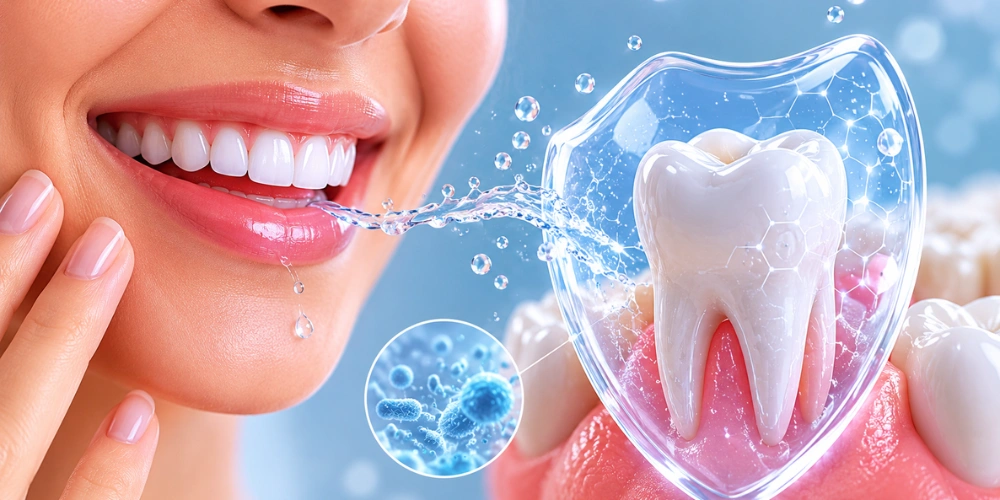
Saliva is often overlooked. It is not something most people think about until their mouth feels dry. Yet this clear fluid plays one of the most powerful roles in maintaining oral health. From enamel protection to acid neutralisation, saliva works constantly in the background to support your teeth and gums.
Every time you eat, drink, speak, or swallow, saliva is involved. It forms part of the natural mouth cleansing system and contributes to the oral buffering system that keeps your teeth strong. Without healthy saliva flow rate, the balance of the oral environment can quickly shift.
What Happens During an Acid Attack in the Mouth?
After eating, particularly foods containing carbohydrates, plaque acids are produced by bacteria. This begins what is often referred to as the acid attack cycle. During this period, pH balance in the mouth drops, and enamel can temporarily soften.
Saliva function in oral health becomes critical at this point. Through acid neutralisation, saliva helps raise the pH back towards neutral levels. This buffering action reduces the time teeth are exposed to acidic conditions.
Saliva also supports remineralisation process by delivering calcium and phosphate in saliva directly to the enamel surface. These minerals assist in reinforcing the tooth enamel repair cycle.
How Does Saliva Support Enamel Protection and Remineralisation?
Tooth enamel may appear solid and unchanging, but it is dynamic. Throughout the day, enamel undergoes cycles of demineralisation and remineralisation. When saliva supplies calcium and phosphate, it supports enamel integrity and reduces the risk of tooth decay progression.
Fluoride interaction further enhances this process. When fluoride is present, saliva helps incorporate minerals into the enamel structure, strengthening the tooth surface.
The following table outlines the protective functions of saliva:
| Protective Function | How It Works | Oral Benefit |
| Acid buffering | Neutralises plaque acids | Supports enamel integrity |
| Remineralisation | Supplies calcium and phosphate | Strengthens tooth surface |
| Cleansing action | Washes debris away | Reduces bacterial build up |
| Lubrication | Moistens tissues | Supports comfort and speech |
Why Is Saliva Important for Bacterial Control and the Oral Microbiome?
Saliva and bacteria control are closely linked. The oral microbiome stability depends on a balanced environment. Saliva helps regulate bacterial populations by washing away excess food debris and limiting the accumulation of harmful by products.
Without adequate saliva flow rate, food debris removal becomes less efficient. Bacteria may multiply more easily, increasing the likelihood of plaque acids and gum irritation.
Saliva glands continuously produce fluid that forms a protective oral barrier across teeth and soft tissues. This barrier supports gum tissue lubrication and reduces friction during speech and chewing.
What Other Roles Does Saliva Play Beyond Teeth?
Saliva also assists in digestion and taste. It begins breaking down food and allows taste receptors to function effectively. When saliva production declines, individuals may notice altered taste sensations or difficulty speaking comfortably.
Key roles of saliva include:
- Neutralises acids produced by plaque bacteria
- Washes away food particles
- Delivers calcium and phosphate to enamel
- Lubricates soft tissues
- Supports balanced oral bacteria
- Assists in digestion and taste
These combined actions highlight how saliva protect teeth in multiple interconnected ways.
When Should Changes in Saliva Flow Be Reviewed?
Reduced saliva flow rate may be temporary, such as during dehydration. In other situations, persistent dryness may influence enamel protection and bacterial balance. If oral dryness continues or if you notice increased plaque accumulation, professional assessment can help determine contributing factors.
Understanding saliva function in oral health reinforces how small biological processes influence long term outcomes. It is not dramatic or visible, yet it is essential.
Why Is Women in Dentistry Elevating Awareness Around Preventative Oral Health?
Women in Dentistry is passionate about shifting the focus of dentistry towards prevention, education, and balanced communication. By highlighting topics such as enamel protection, acid neutralisation, oral microbiome stability, and the remineralisation process, the organisation encourages patients to understand how their mouths function naturally. Rather than relying on exaggerated promises, Women in Dentistry promotes informed decision making and professional integrity across Australian dental practice. Through leadership, mentorship, and advocacy, it continues to elevate the standard of patient centred oral health conversations.
References
Australian Dental Association. Tooth decay and prevention.
https://www.ada.org.au/Oral-Health-Topics/Tooth-Decay
Better Health Channel, Victorian Government. Saliva and oral health.
https://www.betterhealth.vic.gov.au/health/conditionsandtreatments/dry-mouth
Australian Government Department of Health and Aged Care. Oral health overview.
https://www.health.gov.au/topics/oral-health
Frequently Asked Questions
1. Why is saliva important for preventing tooth decay?
Saliva helps neutralise acids, supply minerals for remineralisation, and wash away food debris.
2. What happens if saliva production decreases?
Reduced saliva may affect enamel protection, increase plaque accumulation, and influence oral comfort.
3. Does saliva repair enamel completely?
Saliva supports the remineralisation process, but advanced enamel loss cannot regenerate fully.
4. Can dehydration affect saliva flow?
Yes. Dehydration can temporarily reduce saliva production and contribute to oral dryness.
5. How does saliva help maintain pH balance?
Through its buffering system, saliva neutralises plaque acids and helps restore neutral conditions.
6. When should persistent dry mouth be assessed?
If dryness continues or affects comfort and oral health, professional guidance may be appropriate.
Disclaimer
All dental procedures involve potential risks and benefits. The information provided in this blog is general in nature and should not be taken as medical advice. We recommend that you seek guidance from a suitably qualified health professional before making decisions about your oral health. Where appropriate, you may also wish to consider obtaining a second opinion.
Any images or videos featured are shared with the informed consent of our patients and are intended for educational purposes only. They are not a guarantee of results, as every patient is unique. Treatment outcomes — including recovery, potential complications, and effectiveness — can vary from person to person.





