
When it comes to restoring your smile and maintaining dental health, crowns and bridges play a crucial role in replacing damaged or missing teeth. These dental restorations are highly effective solutions for improving both the appearance and functionality of your teeth. In this article, we’ll explore how crowns and bridges work, the processes involved in getting them, and the numerous benefits these treatments offer.
What Are Crowns and Bridges?
What is a Crown?
A dental crown is a custom-made cap that covers a damaged or decayed tooth. It encases the entire tooth, providing strength, protection, and an improved appearance. Crowns are often used when a tooth is too damaged to support a filling but still needs to remain in place.
Crowns can be made from a variety of materials, including porcelain, ceramic, metal, or a combination of both. The choice of material depends on the location of the tooth, the aesthetic needs of the patient, and the overall strength required.
What is a Bridge?
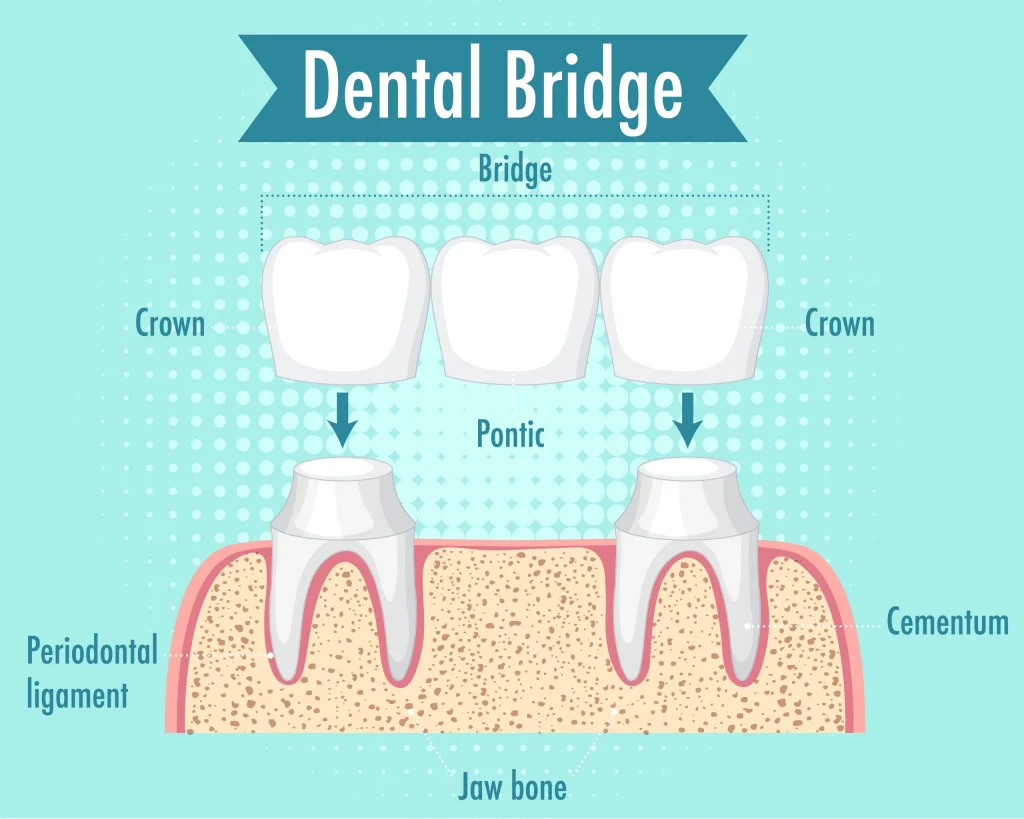
A dental bridge is a restorative solution used to replace one or more missing teeth. A bridge consists of an artificial tooth, known as a pontic, which is held in place by dental crowns on either side of the gap. Bridges are anchored to the natural teeth or dental implants adjacent to the empty space, providing a stable and functional replacement for missing teeth.
Similar to crowns, bridges can be made from porcelain, metal, or ceramic materials, depending on the needs of the patient.
How Do Crowns and Bridges Work?
How Does a Crown Work?
Crowns are designed to restore a tooth that is severely damaged due to decay, fracture, or wear. The process of getting a dental crown typically involves two visits to your dentist:
- Preparation: During the first visit, the dentist will remove the damaged portion of the tooth and shape it to accommodate the crown. This shaping ensures that the crown fits securely over the remaining tooth structure.
- Impressions and Temporary Crown: After preparing the tooth, your dentist will take an impression of the tooth to create a custom-made crown that fits perfectly. In the meantime, a temporary crown may be placed to protect the tooth.
- Fitting the Permanent Crown: Once the permanent crown is ready, the dentist will remove the temporary crown and fit the new one over your prepared tooth. The dentist will check the fit, appearance, and bite before permanently cementing the crown in place.
How Does a Bridge Work?
A dental bridge is ideal for replacing one or more missing teeth. The process of getting a bridge also involves a couple of visits to your dentist:
- Preparation: During the first visit, the dentist will prepare the adjacent teeth (the abutment teeth) by removing some of their enamel to allow space for the crowns that will hold the bridge in place.
- Impressions and Temporary Bridge: After the teeth are prepared, the dentist will take an impression and create a temporary bridge to protect the space.
- Placement of the Permanent Bridge: Once the permanent bridge is ready, the dentist will remove the temporary one and fit the new bridge over the abutment teeth. The pontic (replacement tooth) will fill the gap, and the bridge will be securely cemented in place.
What Are the Benefits of Crowns and Bridges?
- Restore Functionality
Both crowns and bridges restore the normal function of your teeth, allowing you to eat and speak comfortably again. Crowns protect damaged teeth and prevent further deterioration, while bridges fill the gaps left by missing teeth, restoring your ability to chew and bite normally.
- Improve Aesthetics
Crowns and bridges can dramatically improve the appearance of your smile. Crowns, when made of tooth-coloured materials like porcelain, blend seamlessly with your natural teeth, enhancing their appearance. Bridges also provide a natural-looking solution, filling gaps and restoring the harmony of your smile.
- Prevent Further Dental Issues
By restoring damaged or missing teeth, crowns and bridges helps prevent additional dental problems. A damaged tooth left untreated can lead to decay, infection, or tooth loss while missing teeth can cause shifting of surrounding teeth and bite misalignment. Crowns and bridges provide stability and prevent these issues.
- Boost Self-Confidence
Replacing missing or damaged teeth with crowns and bridges can improve your self-esteem. With a restored smile, you can feel more confident in social interactions, improving your overall quality of life.
- Long-Lasting and Durable
Crowns and bridges are durable, with many lasting for 10-15 years or even longer when cared for properly. While they may require occasional maintenance or adjustments, they provide long-term solutions for dental restoration.
- Non-Invasive and Minimal Discomfort
Getting crowns and bridges typically involves minimal discomfort, especially compared to more invasive dental procedures. The process is non-surgical, and local anaesthesia is used to ensure comfort during the procedure.
What Are the Different Types of Crowns and Bridges?
Crowns and bridges come in a variety of materials, each with its advantages:
Types of Crowns:
- Porcelain Crowns: Ideal for visible teeth, porcelain crowns offer a natural appearance and are highly resistant to staining. They are often used for front teeth restorations.
- Ceramic Crowns: Ceramic crowns provide similar aesthetics to porcelain crowns and are highly durable. They are suitable for both front and back teeth.
- Metal Crowns: Made from materials like gold, metal crowns are durable and long-lasting. They are usually used for back teeth where aesthetics are less important.
- Porcelain-Fused-to-Metal Crowns: These crowns offer a combination of strength and aesthetics, with a metal base for durability and a porcelain layer for a natural look.
Types of Bridges:
- Traditional Bridges: The most common type of bridge, traditional bridges consist of a pontic (artificial tooth) and two dental crowns on either side of the gap.
- Cantilever Bridges: Cantilever bridges are used when there is only one tooth next to the gap. The bridge is anchored on one side, making it suitable for certain areas in the mouth.
- Maryland Bridges: Also known as resin-bonded bridges, Maryland bridges are used for replacing missing front teeth. They use a metal or porcelain framework to attach the pontic to the adjacent teeth.
Table: Types of Crowns and Bridges
| Restoration | Material Options | Ideal Use | Benefits |
| Crown | Porcelain, Ceramic, Metal, Porcelain-Fused-to-Metal | Damaged or decayed teeth | Strengthens tooth, improves appearance, long-lasting |
| Traditional Bridge | Porcelain, Ceramic, Metal | Replacing missing teeth with crowns on adjacent teeth | Restores function and aesthetics, stable and durable |
| Cantilever Bridge | Porcelain, Ceramic, Metal | Replacing missing teeth with only one adjacent tooth | Stable, works in certain areas with only one abutment |
| Maryland Bridge | Metal, Porcelain | Replacing missing front teeth | Minimal tooth preparation, aesthetic solution |
How Long Do Crowns and Bridges Last?
Crowns and bridges are designed to be long-lasting, with most lasting between 10-15 years. Proper oral hygiene, regular dental check-ups, and avoiding damaging habits like grinding your teeth or chewing hard objects can help extend the lifespan of these restorations. After this period, they may need to be replaced due to wear or damage.
What Can Go Wrong with Crowns and Bridges?
While crowns and bridges are highly reliable, they can occasionally experience issues such as:
- Crown or Bridge Loosening: Over time, crowns or bridges may become loose, requiring re-cementation.
- Wear and Tear: Crowns and bridges can become worn down from regular use, necessitating replacement or adjustment.
- Decay Around the Restoration: If the tooth under the crown or the abutment teeth supporting the bridge are not properly cared for, decay can develop.
Can Crowns and Bridges Be Repaired?
In some cases, crowns and bridges can be repaired if they become damaged or loose. However, depending on the extent of the damage, replacement may be necessary. It’s important to address any issues with your dentist as soon as they arise to prevent further complications.
If you are a dental professional looking to expand your knowledge and skills in restorative dentistry, consider exploring Women in Dentistry. They offer excellent resources and networking opportunities for dentists who are committed to providing the best patient care, including advancements in crowns, bridges, and other dental treatments.
References:
- Australian Dental Association. “Crowns and Bridges.” https://www.ada.org.au/
- Journal of Prosthetic Dentistry. “Long-term Durability of Crowns and Bridges: A Review.”
FAQs About Crowns and Bridges
- How long does it take to get a dental crown or bridge? Typically, getting a crown or bridge requires two visits to the dentist. The first visit involves preparing the tooth and taking impressions, while the second visit involves fitting and cementing the permanent restoration.
- Are crowns and bridges covered by insurance? Many dental insurance plans offer partial coverage for crowns and bridges, but the extent of coverage can vary. It’s recommended to check with your insurance provider for specific details.
- Can crowns and bridges be replaced? Yes, crowns and bridges can be replaced if they become damaged or worn out. Regular check-ups with your dentist will help identify any issues early on.
- Will a dental bridge look natural? Yes, dental bridges, particularly those made of porcelain or ceramic, are designed to look as natural as possible and blend seamlessly with your natural teeth.
- Are there any special care instructions for crowns and bridges? Proper oral hygiene, including brushing and flossing regularly, is essential to maintaining the longevity of crowns and bridges. Avoiding hard foods or habits like teeth grinding can also help.
- Can a bridge be placed if I don’t have adjacent teeth? Yes, a dental implant can be used to anchor a bridge in the absence of adjacent teeth, providing a stable and functional solution for missing teeth.





