
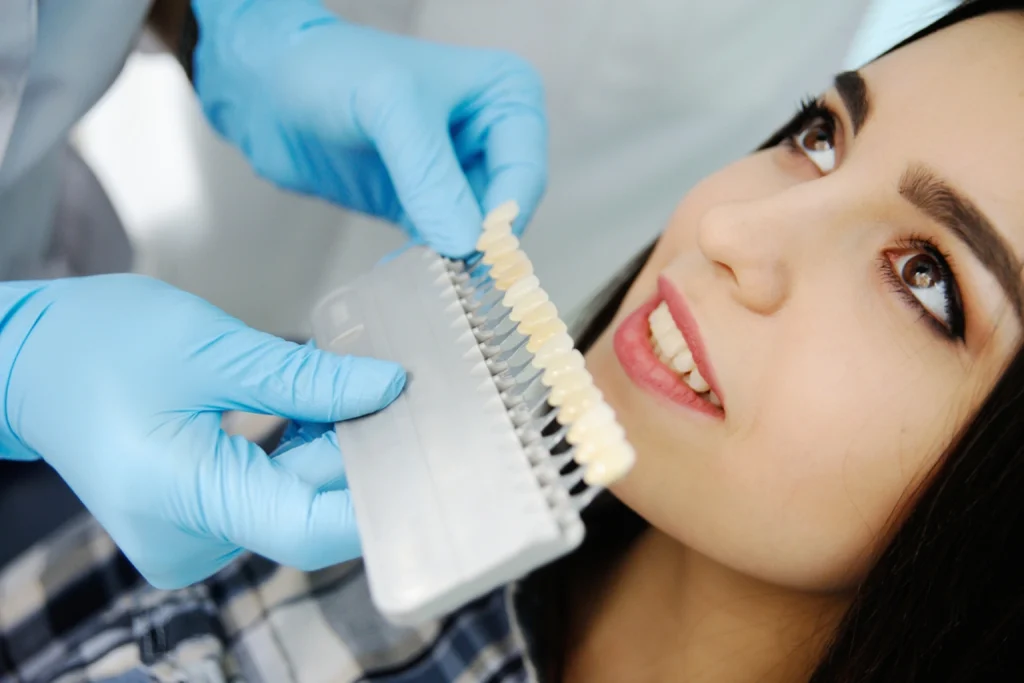
A brighter smile is one of the most commonly wished-for improvements, and professional whitening remains one of the most popular ways to achieve it. The shelves are full of strips, pastes and kits, which makes it easy to overlook the difference a dentist can make. Done professionally, whitening starts with a check that the teeth are suitable and offers stronger, more controlled options than the shelf can provide. Understanding why teeth darken, what whitening can realistically achieve, and how the professional options differ helps you get a result that looks natural and lasts, rather than a hit-and-miss outcome from guesswork.
If you’re looking for in-chair or take-home whitening at our Collins Street practice, including prices and how to book, see our page on teeth whitening in Melbourne CBD.
Why Teeth Lose Their Brightness
Teeth dull for two main reasons. On the surface, everyday favourites such as coffee, tea, red wine and richly coloured foods leave stains that gradually build up in the enamel over the years.
There is also a change from within. The inner layer of the tooth naturally darkens with age, and this internal shift is quite separate from the surface staining that sits on the outside of the enamel.
That distinction explains why results vary. Surface stains tend to lift more readily, while deeper, age-related colour needs a treatment that can work below the surface, which is where many everyday products fall short.
Smoking stains teeth heavily too, and a single tooth can darken on its own after an old injury or root canal treatment, behaving differently from the general dulling of the whole smile. Knowing the cause helps guide the right approach.
What Whitening Can and Can’t Do
Genuine whitening uses a peroxide-based gel to break down staining within the tooth and lighten its underlying shade, which is different from a whitening toothpaste that mainly polishes surface marks away.
As healthdirect notes, whitening removes stains and discolouration but is best done by a dentist Melbourne cbd, and it does not change the colour of fillings, crowns or veneers.
So any existing dental work keeps the shade it was made, which means a smile with visible restorations needs a plan that accounts for them rather than a single approach bought off the shelf.
This is also why whitening begins with a check that the teeth and gums are healthy, since whitening over decay or exposed roots can cause sharp sensitivity that a shop-bought product simply cannot screen for.
In-Chair Whitening
In-chair whitening is carried out at the practice in a single appointment. A stronger professional gel is applied to the teeth under careful supervision, with the gums protected, to lighten them noticeably in one sitting.
Its appeal is speed and control. Because it is done by the dental team, the strength and process are managed carefully, and results are visible straight away, which suits people wanting a change before a particular occasion.
The supervision also means any sensitivity can be watched and managed as the treatment goes, which is harder to do with a product used alone at home.
For many people the appeal is simply seeing a clear result in one sitting, which fits neatly around a busy schedule and takes the guesswork out of whether a product is doing anything at all.
Take-Home Whitening
The take-home option uses custom-fitted trays, made to fit your teeth precisely, along with a professional-strength gel to use at home over a couple of weeks, at your own pace.
Because the trays are made to measure, the gel is held evenly against the teeth, which gives a more consistent result than the loose, one-size strips found on supermarket shelves.
Some people combine the two, starting with an in-chair treatment and maintaining it with take-home trays. Which suits you depends on your teeth, your timeline and the result you are after, all of which a dentist collins street Melbourne can help you weigh up.
It is also worth knowing that whitening is not permanent: the same foods and drinks that dulled the teeth will gradually do so again, so occasional top-ups, easily done with take-home trays, help the brightness last.
For that reason, many people think of whitening as an occasional refresh rather than a one-off event, keeping their smile bright with the odd top-up rather than expecting a single treatment to last forever.
Why Whitening With a Dentist Is More Predictable
For people across the Melbourne CBD, Carlton, Southbank and the surrounding suburbs hoping to freshen their smile, whitening through a dentist offers a more predictable, comfortable result than guesswork on the shelf.
Offering both in-chair and take-home whitening as part of their cosmetic dentistry, the team can check your teeth are suitable, talk through the options and flag where any existing dental work might affect the outcome, so you know what to expect.
A brighter smile is an achievable goal, and starting with a professional assessment is the surest way to reach it without the sensitivity and patchiness that shop kits can bring.
The Takeaway
Teeth lose their brightness from both surface stains and the natural darkening within the tooth, which is why shelf products that only reach the surface often disappoint. Real whitening lightens the tooth from within, but it will not change fillings, crowns or veneers, and healthdirect advises it is best done by a dentist. Professional options include fast, supervised in-chair whitening and custom take-home trays for a consistent result, and the two can be combined. Women in Dentistry offers both in-chair and take-home whitening in the Melbourne CBD, starting with a check that your teeth are suitable.
Frequently Asked Questions
What is the difference between in-chair and take-home whitening?
In-chair whitening is done at the practice in a single appointment using a stronger professional gel under supervision, with results visible straight away. Take-home whitening uses custom-fitted trays and a professional gel you apply at home over a couple of weeks. Both are more effective and controlled than shop-bought kits, and the two can be combined.
Is professional whitening better than shop-bought kits?
Whitening through a dentist starts with a check that your teeth and gums are healthy, uses stronger, more effective gels, and, for take-home, custom-fitted trays that hold the gel evenly. Healthdirect advises whitening is best done by a dentist, which helps avoid the patchy results and sensitivity that loose shop kits can cause.
Will whitening change my fillings or crowns?
No. Whitening lightens natural tooth structure but does not change the colour of fillings, crowns or veneers. Existing dental work keeps the shade it was made, so if it was matched to darker teeth it may stand out afterwards. A dentist can flag this and plan around it before you begin whitening.
Does teeth whitening cause sensitivity?
Some short-lived sensitivity is the most common side effect and is usually temporary. A professional approach helps manage it, as the strength and pacing can be tailored and the teeth checked beforehand. With in-chair whitening the team can watch and manage any sensitivity as the treatment goes, which is harder with a shop-bought product.
How long do whitening results last?
Whitening is not permanent. The coffee, tea, red wine and other everyday foods that dulled the teeth will gradually stain them again over time. Results last longer when paired with good daily oral care, and occasional top-ups, easily done with take-home trays, help maintain the brightness rather than starting over later.
This blog is intended for general informational purposes only and does not constitute medical or dental advice. Every patient’s oral health needs are unique. Please consult a qualified dental practitioner for advice specific to your situation. Women in Dentistry encourages all patients to seek a professional assessment before commencing any dental treatment.





