
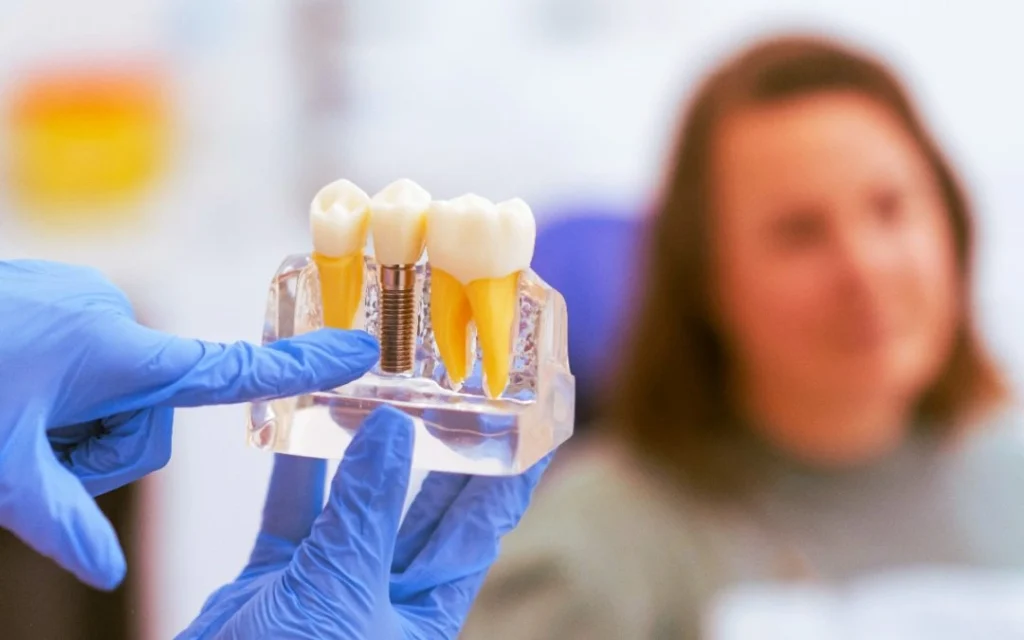
Whenever patients need to restore their missing teeth, most dentists recommend dental implants. This oral treatment not only improves the aesthetics of your smile but also enhances your confidence, teeth functioning, and ultimately, the quality of your life. Being the gold standard in modern tooth replacement choices, it allows you to eat, speak, and smile naturally.
Are you a local of Melbourne who needs implants and wants to learn about them? If yes, then here is the comprehensive guide on dental implants to clear all your concerns about this amazing teeth procedure.
What Do We Call Dental Implants?
These implants are medical devices that dentists surgically place into the jawbone as an alternative to the root of missing teeth. With time, these implanted roots bond with the jawbone, and after that, a crown, denture, or bridge is attached to it. Other names of implants are as follows:
| Other Names | Description |
| Fixture | Used for the implant itself, which is inserted into the jawbone |
| Root-form implant | For the shape of the implant, which looks like a natural tooth root |
| Endosseous implant | Indicates that the implant is positioned within the jawbone |
| Traditional implant | Used to distinguish the standard implant treatment from less common, other types, like subperiosteal implants |
| Implant-supported or Full-arch implants | For the implants that support a full denture or a complete arch of teeth |
Benefits and Risks Of Dental Implants
Over traditional tooth replacement methods, implants have many advantages and a few disadvantages. Let’s take a look at its pros first.
-
- More Durable
Implants have more success rates and are a permanent and cost-effective solution. - Highly Functional
They provide natural teeth-like functionality for chewing and enjoying your favourite meals. - Preserve Jawbone
Dental implants stop bone loss and maintain facial structure by stimulating the jawbone.
- More Durable
- Aesthetically Good
They are customised to look like your natural teeth.
- More Comfortable
Unlike dentures, they are more secure and comfortable.
Besides all these advantages, the complications or risks associated with implants are as follows:
- Slight swelling and bleeding
- Nearby teeth damage
- Slower jawbone healing
- Nerve and sinus damage
- Fracture or infection of the jaw
- Sometimes, allergic reactions to a certain implant type
What Dental Implant Procedure involve?
Dental implant treatment is based on a few steps that can take a few weeks to months for completion. The process includes:
-
Initial Consultation and Treatment Planning
It begins with assessment and treatment planning. It takes X-rays, CT scans, and impressions to evaluate oral health, gum, and jawbone conditions. Then a customised plan is offered according to your dental goals and requirements.
-
Optional Tooth Extraction and Bone Grafting
If there is any damaged tooth, the dentist may have to remove it. Along with this, if there is a damaged jawbone, a bone graft helps to make a stable foundation for the implant.
-
Dental Implant Placement
The step involves the insertion of an implant in the affected area. With the help of local anesthesia and over-the-counter pain relievers, the process is less uncomfortable.
-
Healing and Osseointegration
After implant placement, osseointegration occurs, which is the process of the implant bonding to the jawbone, and it may take a few months. Meanwhile, you may use temporary teeth to maintain functionality and aesthetics until the process completes.
-
Abutment and Crown Placement
After the insertion of the implant into the jawbone, a small connector piece, an abutment, is attached to the top of the tooth. It helps for the further joining of a tooth cap or crown over the implant.
-
Final Restoration
It is the final assessment whether the implants are according to the shape, colour, and size of the treated tooth and are attached to the abutment well.
Common Types of Dental Implants
Here is information about the common types of implants. All these types restore teeth and offer a secure and aesthetically natural appearance.
| Types Of Dental Implants | Features |
| Endosteal Implants | Most common, look like cylinders or screws and are inserted directly into the jawbone. They offer a firm base for connecting artificial teeth to the jawbone. |
| Subperiosteal Implants | Placed over the jawbone, below the gum line, and involves a metal framework with posts that come out through the gum to keep the implant in place. |
| Zygomatic Implants | Used when traditional implants don’t work and there is much bone loss in the upper jawbone. They are attached to the zygomatic bone or cheekbone to offer a stable foundation for tooth restorations. |
| All-On-4 Implants | Supports a full arch of teeth with only four strategically placed implants. It is often a good option for those who want to avoid dentures. |
| Mini Dental Implants | Smaller, like a toothpick or the lead of a pencil, and is a narrower substitute for traditional implants. |
| Single Tooth Implants | Used for a single lost tooth, the implant is inserted into the jawbone while keeping the overall oral health intact. |
| Full Mouth Implants | For those who lack all teeth. They are strong and long-lasting due to strong bonding to the jawbone, and can be cleaned like natural teeth. |
Contact Us For The Best Dental Implants In Melbourne!
For those who are looking for permanent, long-lasting teeth replacement options, Women in Dentistry offers reliable and effective dental implant treatment. Working in the field for over 35 years, we are helping people improve their smile, oral health, and quality of life. With a welcoming and professional environment and a smiling team of dentists, we love to resolve all your teeth issues. If you want to get our top-quality dental services in Melbourne, please book an online appointment or call us now.
FAQs
How long do dental implants last?
On average, implants can last 15 to 20 years with proper oral care. The implants themselves are a permanent solution and need good oral hygiene and regular dental checkups for lasting long.
Who needs dental implants?
If you have broken or cracked teeth, loose dentures, difficulty in chewing, or a tooth infection, you should visit a dental clinic to have implants.
Are dental implants safe?
Yes, implants are usually a safer yet modern restorative treatment. Their safety depends on individual oral health. You dentist asses your oral hygiene before placing dental impnats and also provide personalised aftercare guidelines.
How long do implants take to heal?
Although the healing period depends upon various factors like, number of replaced teeth and the need for bone grafting, it generally takes 3 to 6 months to heal an implant.





