
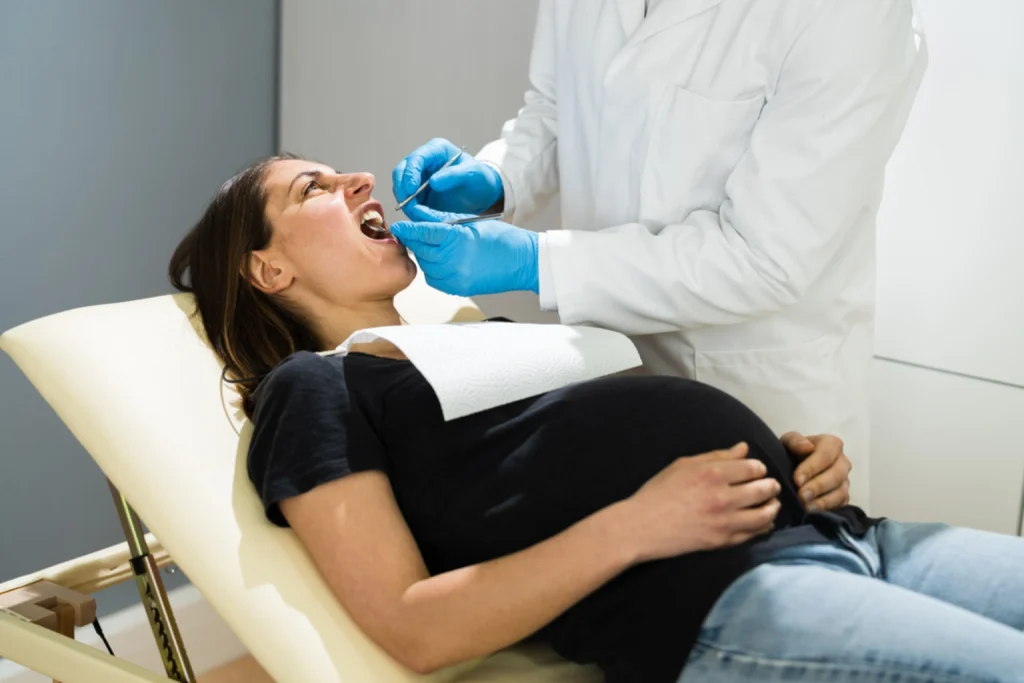
Pregnancy brings a great many changes, and some of the less expected ones happen in the mouth. Shifting hormone levels, changes in eating habits and morning sickness can all affect the teeth and gums, making oral health an important, and sometimes overlooked, part of looking after yourself during pregnancy. The good news is that with a little extra care, and safe, routine dental treatment, these changes are very manageable. Understanding why pregnancy affects oral health, what to watch for, and how to protect your teeth helps you look after both your own smile and, in time, your baby’s.
Why Pregnancy Affects Your Oral Health
As Pregnancy, Birth and Baby explains, hormonal and eating changes during pregnancy can increase the chance of dental problems, so caring for your teeth becomes especially important during this time.
The rise in hormones makes the gums more sensitive to the bacteria in plaque, which is why so many pregnant women notice their gums becoming tender, swollen or prone to bleeding, a condition often called pregnancy gingivitis.
Changes in diet and cravings can play a part too, and morning sickness adds another factor, since stomach acid brought up during vomiting can wear at the enamel over time. None of this is cause for alarm, but it is worth being aware of.
It is worth remembering that these changes are common and, for the most part, temporary, easing after the birth. Being aware of them simply means you can take a little extra care during the months when the mouth is more vulnerable.
Every pregnancy is different, so it is worth mentioning any changes you notice to your dentist Melbourne CBD, who can reassure you about what is normal and step in early if anything does need attention.
Pregnancy Gingivitis and Bleeding Gums
Tender, swollen gums that bleed when brushing or flossing are among the most common oral changes in pregnancy. It is a form of the early, reversible stage of gum disease, driven by the hormonal shifts of pregnancy.
Because severe gum disease during pregnancy has been linked with complications, keeping the gums healthy matters for more than comfort alone. The reassuring part is that good daily care and professional cleans keep it well under control.
So bleeding gums during pregnancy are worth acting on rather than ignoring. Keeping up with brushing and cleaning between the teeth, even when the gums are tender, is one of the most helpful things you can do.
Occasionally a small lump can appear on the gums during pregnancy, sometimes called a pregnancy epulis, which is usually harmless and tends to settle after the birth. Any such change is still worth mentioning to a dentist so it can be checked.
Looking After Your Teeth Day to Day
The foundations remain the same: brushing twice a day with a fluoride toothpaste and cleaning between the teeth daily. If tender gums or a sensitive gag reflex make this harder, a soft toothbrush and trying at a different time of day can help.
Morning sickness needs a little extra thought. It is best not to brush straight after vomiting, since the enamel is temporarily softened by stomach acid; rinsing with water, or smearing a little fluoride toothpaste on the teeth, and waiting a while before brushing is kinder to the teeth.
Watching sugary snacks helps too, particularly if cravings or frequent small meals mean grazing through the day, since this keeps the mouth exposed to sugars and acids for longer.
Is Dental Treatment Safe During Pregnancy?
Routine dental care is safe and encouraged during pregnancy, and a check-up is a valuable part of looking after yourself. It is always worth letting the Melbourne dentist know you are pregnant so your care can be tailored accordingly.
Many people find the second trimester the most comfortable time for a dental visit, being past the worst of any morning sickness and before the later stages make lying back in the chair less comfortable.
Some elective or cosmetic treatments, such as whitening, are usually best left until after the baby is born, but routine and urgent care should never be put off out of worry, since untreated problems can be more of a risk than the treatment itself.
Caring for Your Smile in Melbourne CBD
For expectant mothers across the Melbourne CBD, East Melbourne, Richmond and the surrounding suburbs, a little extra attention to oral health is a valuable part of a healthy pregnancy.
As an all-female practice, the team offers general treatment and hygiene, including gentle check-ups and cleans suited to pregnancy, and can advise on caring for your teeth and gums through each stage.
Looking after your own oral health also sets the stage for your baby’s, so a check-up before or during pregnancy is a small, worthwhile step for both of you.
The Takeaway
Pregnancy affects oral health through hormonal changes, shifting eating habits and morning sickness, most commonly causing pregnancy gingivitis, where the gums become tender, swollen and bleed easily. Keeping up brushing and cleaning between the teeth, being gentle with enamel after vomiting by not brushing straight away, and watching sugary snacks all help. Routine dental care is safe and encouraged during pregnancy, ideally in the second trimester, while elective treatments like whitening are best left until after the birth. Women in Dentistry is an all-female practice offering gentle check-ups and cleans suited to pregnancy in the Melbourne CBD.
Frequently Asked Questions
Why do my gums bleed more during pregnancy?
Rising hormone levels during pregnancy make the gums more sensitive to the bacteria in plaque, so they can become tender, swollen and prone to bleeding. This is known as pregnancy gingivitis, a form of the early, reversible stage of gum disease. Keeping up gentle brushing and cleaning between the teeth, and professional cleans, keeps it under control.
Is it safe to see the dentist while pregnant?
Yes. Routine dental care is safe and encouraged during pregnancy, and a check-up is a valuable part of looking after yourself. Let your dentist know you are pregnant so your care can be tailored. Many people find the second trimester the most comfortable time, and routine or urgent care should not be put off out of worry.
Should I brush my teeth after morning sickness?
Not straight away. Stomach acid from vomiting temporarily softens the enamel, so brushing immediately can wear it faster. Instead, rinse with water or smear a little fluoride toothpaste on your teeth, and wait a while before brushing. This gives the enamel time to recover and is much kinder to your teeth.
Can I have teeth whitening while pregnant?
Elective cosmetic treatments such as teeth whitening are usually best postponed until after your baby is born. Routine and urgent dental care, however, is safe and should not be delayed. If you are considering any cosmetic treatment, it is worth discussing the timing with your dentist, who can advise what is best during pregnancy.
Does my oral health affect my baby?
Looking after your own oral health is a positive step for your baby too. Severe gum disease during pregnancy has been linked with complications, so keeping your gums healthy matters. Good oral health habits also set a foundation for your child’s, so a check-up before or during pregnancy is worthwhile for both of you.
This blog is intended for general informational purposes only and does not constitute medical or dental advice. Every patient’s oral health needs are unique. Please consult a qualified dental practitioner for advice specific to your situation. Women in Dentistry encourages all patients to seek a professional assessment before commencing any dental treatment.





