
Cosmetic Dentist in Melbourne CBD
Looking for a cosmetic dentist in Melbourne usually starts with a bigger question: what would actually make a difference to your smile, and what’s the most conservative way to get there? At Women in Dentistry, cosmetic treatment begins with healthy teeth and an unhurried conversation, so the options we suggest suit your teeth and what you want to change.
This page explains the cosmetic treatments we offer at 15 Collins Street and helps you work out which might suit your concern. Each treatment has its own page with more detail.
What cosmetic dentistry involves
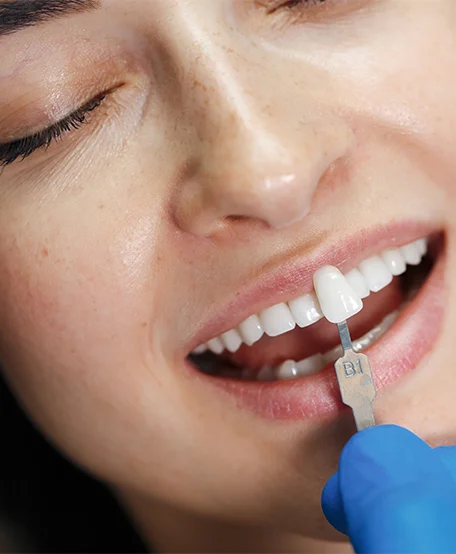
Cosmetic dentistry covers treatments that change the colour, shape, alignment or proportion of teeth. Some, such as whitening, don’t alter tooth structure at all. Others, such as porcelain veneers, involve preparing the teeth and are permanent. A smile makeover is simply a plan that combines more than one treatment in a sensible order.
Teeth whitening
Whitening lightens natural teeth that have yellowed or stained, using in-chair or take-home treatment supervised by a dentist. It doesn’t change the colour of crowns, veneers or fillings. Read more about teeth whitening.
Handcrafted porcelain veneers
Porcelain veneers are thin shells of ceramic, handcrafted by a ceramist and bonded to the front of the teeth. They can change colour, shape and proportion, and they involve removing a small amount of enamel. Read more about porcelain veneers .
Invisalign
Invisalign uses a series of clear, removable aligners to move teeth gradually into a planned position. Because it moves the teeth themselves, it can reduce or remove the need for veneers when the concern is crooked teeth. Read more about Invisalign.
Composite bonding
Bonding uses tooth-coloured resin, shaped directly on the tooth, to repair small chips, close minor gaps or even out an edge. It usually needs little or no removal of natural tooth and is often done in one visit.

Which cosmetic treatment is right for me?
The right treatment depends on your concern, and more than one option is often reasonable. As a starting point:
Discolouration
General yellowing or staining usually starts with whitening. Deeper grey or brown discolouration, or a single dark tooth, may need bonding or veneers, as whitening won’t always reach it. A tooth that has darkened after an injury or root canal treatment should have its health checked first.
Chips
Small chips are often repaired with bonding. Larger chips, or several chipped and worn edges, may suit porcelain veneers or, where a tooth is weakened, a crown.
Gaps
Small gaps can be closed with bonding or veneers. Larger gaps, or gaps caused by teeth drifting, are often treated more predictably by moving the teeth with Invisalign, sometimes finished with bonding.
Crooked teeth
Invisalign moves the teeth and keeps natural tooth structure intact. Veneers can disguise mild irregularities, but they aren’t a substitute for alignment when teeth are significantly crooked or the bite needs correcting.
Worn teeth
Teeth worn short by grinding or acid erosion need the cause understood first, as new restorations on a grinding bite can chip. Depending on the extent of wear, options include bonding, veneers or crowns, often with a night splint.
Who cosmetic dentistry suits, and who it doesn't
Cosmetic treatment suits adults with healthy teeth and gums who have a clear idea of what bothers them about their smile. Decay and gum disease need treating first, whitening is generally postponed during pregnancy and breastfeeding, and people who grind their teeth may need that managed before veneers.
It’s also worth being honest about expectations. Cosmetic dentistry works with your own teeth, face and bite, and sometimes the most suitable advice is to do less than you expected, or nothing at all.
Our smile design process
1
Your consultation
We start by listening to what you’d like to change, then examine your teeth and gums, take photographs and use digital X-rays or 3D imaging where needed. For veneers and Invisalign, the first step is a complimentary veneers consultation or a complimentary Invisalign consultation , which includes walking you through the process, discussing your concerns and the options, checking your teeth are suitable, covering any alternatives or a referral where appropriate, and a complimentary tailored treatment plan.
2
Digital planning
We use digital photographs and scans to plan changes before treatment starts, so you can see and discuss the proposed shape and proportion of your teeth.
3
Your treatment plan
Your plan sets out each treatment, the order it happens in, how long it takes and what it costs. Order matters: teeth are usually aligned before veneers, and whitened before bonding or veneers so everything is matched to the lighter shade.
4
Aftercare and how long results last
Whitening fades gradually and can be topped up, bonding may need polishing or repair over time, and porcelain veneers eventually need replacing. Regular check-ups and a night splint, if you grind, help your results last as long as possible.
Why patients choose Women in Dentistry for cosmetic dentistry
Our Principal Dentist, Dr Nimisha (AHPRA registration DEN0001658743), is a general dentist whose clinical work focuses on orthodontics, Invisalign and restorative dentistry, and our veneers are handcrafted by a ceramist. The clinical team is all female, with over 40 years of practice behind it, and everyone is welcome. We use 3D imaging, digital X-rays and laser dentistry where they’re clinically useful.
You’ll find us at Level 6, 15 Collins Street, three minutes on foot from Parliament Station and close to the 12, 48 and 109 tram routes, with complimentary valet parking for up to two hours at the Sofitel Melbourne on Collins. We’re open six days, and patients visit from Port Melbourne, North Melbourne and East Melbourne as well as the CBD.
The cost of seeing a cosmetic dentist in Melbourne
Costs vary widely, because cosmetic treatment ranges from a single bonding appointment to a full set of veneers, so the guides below set out each treatment separately. Our cost guides for teeth whitening, veneers and Invisalign explain what’s included and what changes the price. Cosmetic treatment usually attracts limited health fund cover, but we accept all major health funds with HICAPS, and payment plans are available.

Frequently Asked Questions
What does a cosmetic dentist do?
A cosmetic dentist provides treatments that change the colour, shape or alignment of teeth, such as whitening, veneers, bonding and clear aligners. Good cosmetic care also checks that teeth and gums are healthy before any treatment starts. The aim is a plan that suits your teeth, bite and goals.
Who provides cosmetic treatment at Women in Dentistry?
Our general dentists. Whitening, veneers and Invisalign are all planned and carried out by the clinical team here, around your teeth, your bite and what you want to change. Where another option would suit you better, we will say so and arrange a referral where appropriate.
Is cosmetic dentistry covered by health insurance?
Treatment done purely to change appearance is usually classed as cosmetic, so most health funds offer little or no cover. Some treatments that also restore damaged teeth may attract a rebate under extras cover. Ask your fund what your policy pays, using the item numbers on your quote.
Should I whiten my teeth before getting veneers?
Usually, yes. Whitening doesn’t change the colour of porcelain veneers, so whitening natural teeth first lets the veneers be matched to the lighter shade. Your dentist will advise on timing.
Can I straighten my teeth instead of getting veneers?
Often, yes. If the main concern is crooked or crowded teeth, clear aligners such as Invisalign move the teeth without removing enamel. Some people then need fewer veneers or none at all.
How long does cosmetic dental treatment last?
It depends on the treatment. Whitening fades gradually and can be topped up, while porcelain veneers typically last 12 to 15 years with good care before needing replacement. Regular check-ups help results last.

Book a cosmetic consultation
What the complimentary consultation includes
- Walking you through the process step by step
- Discussing your concerns and the options to address them
- Checking the teeth in question are healthy and suitable for the treatment
- Discussing any alternative treatments, or a referral where appropriate
- Answering all your questions
- Going through examples of previous cases
A complimentary tailored treatment plan is included. The wax-up and pre-op smile design are not.
Book a complimentary veneers consultation or a complimentary Invisalign consultation , or take the smile assessment for veneers or Invisalign if you’re still deciding. For whitening, bonding or general questions, call l (03) 9650 2863, or (03) 8338 4120 if you’re new to the practice, or book an appointment online .
Any surgical or invasive procedure carries risks. Before proceeding, you should seek a second opinion from an appropriately qualified health practitioner.